Showing posts with label teaching. Show all posts

Thursday, August 2, 2018

Rethinking Our Beginning of the Year Read-alouds

Hello, all!

     As we're gearing up for another school year, I like many of you have been searching online for beginning of the year activities and read-alouds, thinking, "What should I keep from last year? What can I change to make the beginning of the year more successful for my students?"

     Looking through all of the back-to-school read-alouds, I was struck by something I honestly should have noticed long before this...they are all written by white authors with primarily white characters.  And I got to thinking, "Has the practice of beginning the year reading books depicting white students and authors given my students the impression that school success is for white students only?  Have I (whether consciously or unconsciously) been telling my students of color that my classroom, and maybe school in general, isn't really for them?"

     That's not to say that the books listed on the typical back-to-school read-aloud list aren't good books. Many of them are. I personally love First Day Jitters, The Recess Queen, Enemy Pie, and Spaghetti in a Hot Dog Bun. However, in the same way that high school literature teachers are looking to rethink the "classic" texts long thought of as required reading in order to include great literature written by women and authors of color (see #disrupt texts movement), shouldn't elementary school teachers also be rethinking what we consider to be "classic" read-alouds? 

     For myself, the answer is, of course, yes. I did a little digging online and in my local library and found some great beginning of the school year read-alouds featuring diverse characters brought to life by diverse authors.  (One of my pet peeves is "diverse" literature written by middle class white Americans. Just because we went on a mission trip in a different country, grew up in a diverse neighborhood, or have a spouse/best friend/other family member of color does not qualify us to write from their point of view or tell their stories. Sorry.)

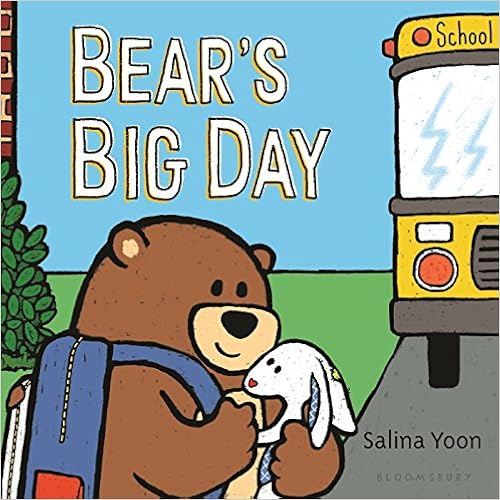
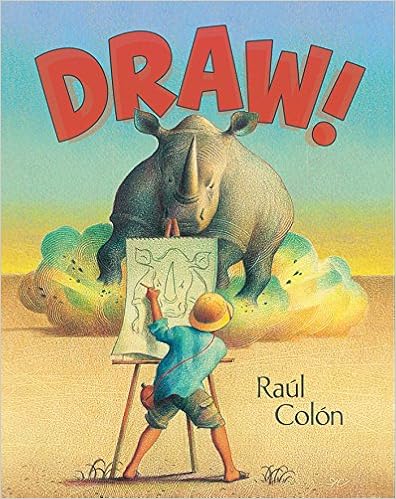
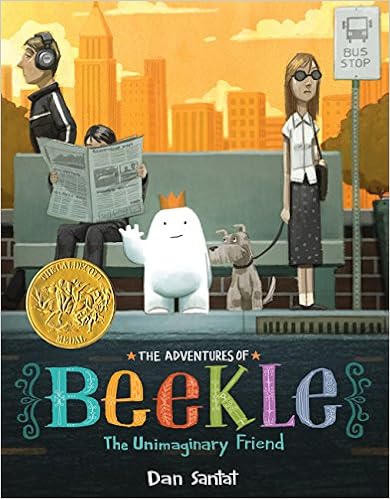
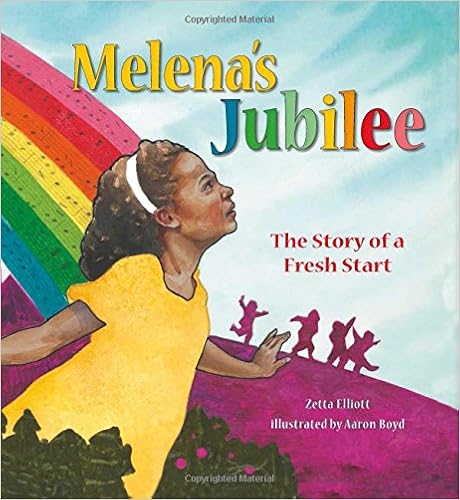
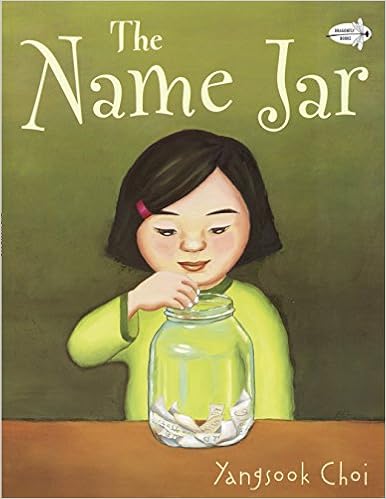
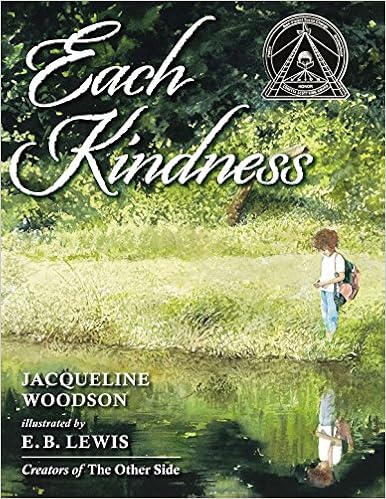
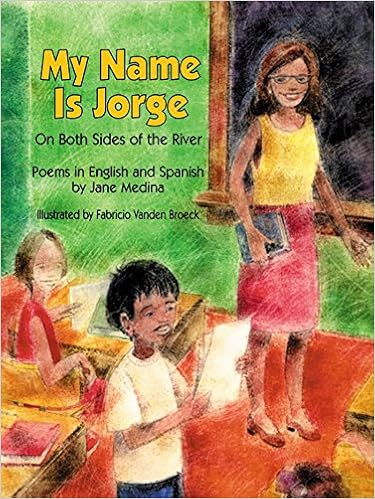
    So, here are a few great stories that I will be adding to my repertoire of back-to-school read-alouds.  I hope you'll find a few that speak to you.  Diversity adds to all of our lives and opens us up to new experiences and different points of view that enrich our souls and help us better understand our fellow human beings.

 Click on the pictures to find out more about each:


    The Day You Begin by [Woodson, Jacqueline]                        


Enjoy!!  And best wishes for a successful start to the new school year!!
Jacquie  

Monday, April 29, 2013

Choosing Texts for Early Readers

As an ELL teacher, choosing texts to use with my students is perhaps one of the most challenging parts of my job.  Each week, I struggle with how to focus my text selection: vocabulary topics?  grammar function?  fluency?  literary devices?  And then, from where should I pull the texts: guided reading room?  library?  from the same publisher each time, or mix and match?  In her book Becoming Literate, Marie Clay asserts that "it is the individual child's achievements and where he next needs to go that [should govern] the selection" (p. 182).  So, with the multitude of information our lower-level ELL's need to know, how do we choose a text that will meet their needs, but still foster a love of reading?

Some tips from Marie Clay:
  • Use texts you have previously read to students.  Known texts are "still new and challenging because the child is bringing that prior knowledge to the text...using a different kind of support from the interactive sharing of the task with the teacher" (p. 184).  Be sure to couple the re-reading of the text with a new focus.  If the original sharing of the book focused on vocabulary, have the re-reading experience tackle a literary device used by the author.
  • Be wary of using contrived texts: "If [students] have only read controlled vocabulary texts [they] will have difficulty with texts that do not control the vocabulary" (p. 187).  Relying on contrived texts can also have a detrimental effect on oral language development if students learning English are presented with one way of "speaking" English in texts and then are expected to understand and respond to the language those around them produce naturally. 

  • Story books should be an integral part of a student's reading journey, but should not be the only method used to teach students to read. "To learn to anticipate the language and situations found in stories children have to build up a vast experience with children's story books...Some children do not get those experiences before they come to school and teachers who use a story book reading programme must provide them with make-up experiences" (189).  ELL's often come to school with very little knowledge of story structure or the purpose of reading.  It's therefore imperative that we provide as many opportunities for our students to interact with quality literature as possible.  However, story books are not often written for beginning readers to read on their own.  Portions could be read by students in a big-book or projectable format.  Language Experience Approach texts could be created by students based on the story books to give students a pathway into the text.

  • While LEA's do give children who are learning English a textual experience with which they can connect, "it is not enough to read only natural language or language experience texts.  Children need book experience to read books.  Book language has different forms and different frequencies of occurrence from spoken dialects.  Natural language texts can be regarded as transitional texts, used when the child is just beginning to relate what he knows about oral language and print to the written texts he is trying to read"  (p.191).

For slower readers and those who are learning to read while at the same time learning English, natural experience texts and repeated contact with familiar literary texts initially presented by teacher are a natural starting point for literacy development.  Consistently working only with simple, controlled material can "develop habitual responding for that type of material.  This learning will not transfer readily to more complex texts" (195).  Staying away from such contrived texts is especially critical for ELL's.  Students must be exposed to rich language use and have the opportunity to swim around in it and be immersed.  This is the only way their oral language, and then later their written language, will develop to the depth of meaning that native English speakers enjoy.

Happy reading,
Jacquie

Monday, April 8, 2013

Directionality and Storybook Reading

In Chapter 6 of Becoming Literate, Marie Clay writes that children face three main challenges after their initial experiences with print.  One of those challenges is the directionality of print.  In English text, of course, this means learning that print goes left to right.  Period.

I hadn't considered this skill to be anything unusual for children to learn until Clay opened my eyes: "The child's everyday experience has actually trained him in different habits from those he needs in reading.  An orange, a dog or a favourite toy must be recognized from any viewing angle.  Meaning is constant when the object is small or large, is upside-down, back-to-front, or sideways to the viewer...On entry to school he has to learn that in one particular situation, when he is faced with printed language, flexibility is inappropriate."  (Clay, 1991).  DUH!  I had never thought of directionality in reading as something entirely foreign in its adherence to one serial direction in the world of a child for whom every other experience has been multi-directional.

After that "ah-ha" moment, I decided to check out whether or not my kindergarten students truly understood the directionality of print.  Using the Sulzby Storybook Reading Assessment, I had my students read a Goldilocks book to me.  The students were already familiar with the text from a read aloud the previous week.  The book has multiple lines of print on each page, so I was able to gauge whether or not students had learned the following:
  • directionality
  • return sweep
  • high frequency words
  • using pictures to gain meaning
  • the language "style" of story telling
In addition, I was also able to take notes on what aspects of oral English the students have acquired.  For example, whether or not they correctly form and use plural nouns or regular past tense verbs. 

The Sulzby assessment taught me a lot about my students!  I was surprised to learn that one of my students has not yet mastered directionality.  Not surprisingly, he was also the only one who didn't use the pictures to tell a story, but rather just labeled what he saw in each picture.  He jumped back and forth between right and left pages of the book and only attended to the pictures.  He paid no attention to the print.  My other two kindergarteners demonstrated knowledge of each of the skills I was assessing.  One of the students even made a serious attempt to read each word on the page, and he did a great job of it!

Now, I know which of my students are ready to move on, and which needs more work with simple, one lined texts and retelling stories after read alouds.  I highly recommend reading the Sulzby article (link above) and trying this assessment with emergent readers.

Happy reading!
Jacquie

Monday, April 1, 2013

Islands of Certainty

The title of this blog post is one of my favorite Marie Clay-isms: "islands of certainty."  She writes that "in the familiar story the child locates a word he knows and builds a response around it.  Then the child's reading of text comes to be controlled by particular words even though he can only recognize one or two words" (Clay, 1991).  These familiar words are the "islands of certainty" in a sea of unknown text.  Often, for emerging readers, these islands are sight words.

If you visit pinterest, you'll find a plethora of sight word games and activities geared to helping children memorize these most common words in English text.  However, the majority of the activities involve memorizing the words out of context.  For ELL's, sight words are often meaningless, so it's imperative that literacy teachers of ELL's focus on meaning and usage when teaching sight words and present the words in connected text.

Introducing new sight words doesn't need to be overly complicated, even when working with emergent language learners.  For example, when working with my first grade emergent students, I introduce new sight words with the following 5-day procedure:
  1. Oral language practice: I write five new sight words on index cards.  We practice reading them out loud.  I use each word in a sentence or two as examples.  Then, the students all use each word in a sentence.  My students love making up sentences so well that they usually have multiple sentences for each word!  This is not only a great way for the students to get oral language practice, but it's also an opportunity for me to ensure that the students truly understand what each word means and how to use it.  I can gently correct any misunderstandings before they become fossilized.
  2. Words in context: I write sentences with each sight word on sentence strips that I post on the board.  The sentences are taken from those that the students invented the day before.  We read the sentences together out loud.  Then, the students choose one of the sentences to re-read with expression.  This is also a big hit!
  3. Guess the covered word: I cover or remove the targeted sight word from each sentence, and the students have to choose the correct word to go in the sentence.  We then do the same procedure with new sentences using the targeted sight words.
  4. Writing sentences: Students write sentences of their own using each of the targeted sight words.  Then, they share their favorite with their classmates.
  5. Fast ten: This is a quick check of the new sight words and a few known sight words.  Students write the words on white boards as quickly as they can.  They only win "points" if they not only write the word quickly, but also correctly.
Throughout the week, we find and circle the targeted sight words in our focus story and in our shared writing.  This gives students many more examples of the use of sight words in connected text.

I keep a list of the sight words that I've taught to the group.  When I read with each student individually each week, I double and triple-check that these "islands of certainty" remain not only in the students' reading repertoire, but that they are also using those sight words correctly in their oral language.  The one-on-one time I eke out to read with each student gives me the perfect venue for checking progress on a number of skills.  Carving out that time isn't easy, but it's well worth the effort!

For more activity ideas that use connected text to teach new words to ELL students, check out Phonics They Use by Patricia Cunningham.

Happy reading,
Jacquie

Wednesday, January 30, 2013

Two Interesting Articles


After almost a year's absence, I'm back to my blog!  I'm starting my Reading Endorsement at Otterbein University here in Ohio--I'm really excited about the classes I'll be taking!!  As part of the first class, I need to write a blog post every week, so this should get me into the habit of posting...(I hope!!)

Below are two articles that I posted for colleagues on Schoology.  If you haven't already checked out Schoology, I highly recommend it.  The site is very similar to Facebook.  School districts can get a district account so that all of its educators can be linked together for the ultimate professional collaboration experience!  Our district has even developed high school courses for students and professional development courses for teachers through Schoology.

This study was recently released.  It looks at technology's effectiveness in teaching ELL's. The focuses on a few different programs: RocketShip Education, HELP Math, ELLevation, Achieve Language, Voki, and the ESL program in Montgomery County Public Schools in Maryland. 


Good article about the challenges ELL's face having to learn English at the same time that CCSS are asking for students to master sophisticated language. It discusses the challenges, highlights initiatives and strategies to advance ELLs' language and content learning, and outlines how policy and practice must change to help ELLs graduate ready for college and a career.

Happy reading!
Jacquie

Saturday, April 21, 2012

Boost Reading Skills With One Small Change


An OSU study found that making one little change to reading aloud--referencing print--boosts children's reading skills later on. Interesting! Is this something you do when you read aloud to your students? your children?

Monday, March 12, 2012

Using 365 Projects to Promote Learning for ELL's


Many of my friends have gotten into a 365 Project or two, and while I've admired their work, I never considered doing one myself until today.  First of all, what is a 365 Project?  Usually, it is a "photo a day" project...an individual's documentation of daily events and memories, or a photographer's portfolio of great photos, day by day.  This idea has been expanded to include portfolios of different sounds, quotes and videos.  I've even seen a "Quilt a Day" project!

So, how could ESOL teachers use 365 Projects to facilitate language instruction?
  • Teachers can use the "Photo a Day" idea to begin a collection of photos for vocabulary instruction.  How often do we look online for an existing photograph to use, only to settle (often hours later) for a photo that doesn't quite capture what we want to teach? 
  • Create a teaching portfolio, using a photo or video clip of a great lesson you teach each day.  This is a great way to share teaching ideas with colleagues.
  • "A Piece of Realia a Day"--Make a list of items you wish you had to teach core content concepts and vocabulary.  This list would, of course, be ongoing!  Every day, collect one item on the list to build up your collection.  As you find the items, you might also want to photograph them so you have a catalog of your items that is easy to access while you plan lessons.
  • "A Word a Day" lessons are nothing new, but they can be updated for the 21st century!  Have students create an e-dictionary of social or academic vocabulary that they encounter daily.  They can use your 365 photo collection to illustrate their dictionaries!
  • If your students have access to a digital camera, they can start their own "Photo a Day" projects.  This could be done individually, in a small group, or as a class.  Students can use their photos to inspire writing ideas.  Emergent level students could use their photos to participate in Shared Writing activities.
These are obviously just a very few of the ways a 365 Project could be used as a tool for language learning!

I'm starting my Vocabulary Photo a Day project tomorrow!

Monday, December 5, 2011

Book Study: Why Do ELL's Struggle With Reading?

Distinguishing Language Acquisition From Learning Disabilities

Currently, I’m leading a book study in my district, using the book Why Do English Language Learners Struggle With Reading: Distinguishing language acquisition from learning disabilities (Edited by J.K. Klingner, J.J. Hoover & L.M. Baca).  The book is a good “anchor” for discussions about the similarities and important differences between students learning English and those with learning disabilities.  Each chapter is written by different authors, including the editors, and covers background necessary for developing an understanding of the process of learning English as well as how a learning disability might manifest itself during that process.

The first chapter gives background information on English language acquisition and learning disabilities, as well as statistics related to over and under-representation of minorities in Special Education programs.  The second chapter, which in my opinion is one of the more valuable chapters in the book, lists and describes eight common misconceptions about learning a second language.  Response to Intervention is the subject of chapters three and five, with an emphasis on how RTI should look for English Language Learners and how to use data to inform our decisions about students.  Chapter four focuses on helping classroom teachers distinguish between learning disabilities and language acquisition.  Chapter six covers special considerations when testing ELL’s for learning disabilities, including a section on using authentic assessment.  Finally, the last chapter brings it all together with practical applications.

Like I said earlier, I use this book as an “anchor”.  It is our starting point for discussions, but I’ve brought in other articles to expand on the information covered in the book.  I have the links to a few of those articles listed below.  Also, I’ve attached the study guide I created for the book study.  Why Do English Language Learners Struggle With Reading is a useful resource for both teachers and administrators who want to dig deeper into an ELL’s academic performance and understand more of the factors that lead to success for linguistically diverse students.


STUDY GUIDE:
Why Do ELL’s Struggle With Reading:
Distinguishing language acquisition from learning disability

Session One: Introduction and Chapter One
Background Information

Discussion Questions:
1.  A lot of statistics were thrown out in pages 5-8.  Were any of them surprising?
2.  Look at your students.  What percentage of them are LD?  ESL?  both LD and ESL?
3.  Do you think ELL’s in your school are over or under-represented in Special
     Education programs, or neither?
4.  What assessment does WCS use to identify students with LD?
5.  Are native language assessments available?  If they are, should they be used?  What are some pros and cons of using native language assessments?
6. Applications/ implications?


Session Two: Chapters 2 and 4
Misconceptions and helping classroom reading teachers

Discussion Questions:
1.  What do you think of the concept of “potential bilinguals”?  Is this different from the
     way ELL’s are viewed in your building?
2.  After reading about MacSwan’s 2004 research comparing three standardized Spanish assessments with natural language samples, did your opinions about using native language assessments change at all?  How and why?
3.  In Escamilla’s research findings, he refers to looking at some writing errors as signs
     of “emerging biliteracy.”  Is this valid?  Have you noticed native language
     interference in your students’ writing?
4.  Do you think it’s important for reading teachers to learn which sounds in a student’s
     native language do not exist in English in order to help the student with phonemic
     awareness?
5.  Do you agree with the assertion in Chapter 4 that teachers don’t spend much time
     teaching comprehension strategies to students?
6.  What are your thoughts on the motivation piece when it comes to learning how to
     read?  Could some of ELL’s lack of motivation be a response to an ineffective
     reading program?
7.  Respond: “Another way to think about this is not that the children have disabilities,
     but that they are in ‘disabling contexts’”.
8. Applications/ implications?

Session Three: Chapter 3
RTI and ELL’s

Discussion Questions:
1.  What does RTI look like at your building?
2.  How does ESL staff fit into the RTI model?
3.  Which, if any, of the challenges faced by Marble Mountain Elementary School are
     similar to challenges your school faces (or has faced) with implementing RTI?
4.  Is RTI in your building very different from the old IAT process?
5. Applications/ implications?


Session Four: Chapter 5
Data-driven decision making in RTI       

Discussion Questions:
1.  In this chapter, the author makes a definite distinction between learning disabilities and learning differences.  What were your thoughts on this distinction?  I have an article to share about this issue!
2.  Any thoughts on the chart showing similarities between cultural/ linguistic behaviors and suspected learning disabilities (Table 5.1 on page 79)?
3.  Are the interventions done in your building for RTI appropriate, evidence-based interventions?  How do you know?  Where could we look to find such interventions?
4.  What would non-discriminatory progress monitoring look like?
5.  In RTI meetings, does the team consider alternate reasons for suspected problems?
6. Applications/ implications?


Session Five: Chapter 6
Considerations when assessing ELL’s for SE

Discussion Questions:
1.  Do you think it is important to look at the linguistic appropriateness of standardized assessments used to determine LD in ELL’s?  Have you done this before?
2.  What assessments are used in WCS to determine whether or not an ELL has a LD?
3.  Do you use Classroom Based Assessment/Measurement in your classroom?  If yes, what is your experience with it?  Do you consider it valid and reliable?
4.  What are your thoughts on dynamic assessment?
5. Applications/ implications?

Session Six: Chapter 7
Putting the pieces together

Discussion Questions:
1.  What are your thoughts on the checklist of components for a successful learning environment for ELL’s?  Would you add anything to this list?
2.  Will you change anything you do after reading and discussing this text?  If yes, what would you change and why?  If no, why not?


Links to some additional resources:
Considerations in implementing intervention assistance teams with ELL's
Disproportionality in special education identification and placement of ELL's
Separating differences and disabilities: a powerpoint presentation from Cross Culture Ed
Separating difference and disablity by Catherine Collier

Happy reading!
Jacquie

Wednesday, March 30, 2011

Carmen Learns English

I have to admit, I did not love this book.  While I appreciate the author, Judy Cox's, intent, I am not a fan of multicultural books written by people who are not either a part of the ethnic group about which they are writing or embedded in that culture.  The illustrations in ink, watercolor and acrylics by Angela Dominguez, however, are engaging and full of emotion.


The story follows the experience of a Spanish speaking kindergartner named Carmen who is nervous about attending school in English.  The themes are pretty standard--she is nervous about speaking English in class, she misunderstands some of the words used in class and has trouble pronouncing others, a couple of times she is made fun of, ... The author attempts to use code-switching, but it is stilted and awkward--not at all natural.  The feelings experienced by the main character, Carmen, feel superficial and forced. 


The one element threaded throughout the story was that of Carmen going home and teaching her younger sister, Lupita, the little bit of English that she learned at school each day.  Had that been explored more and made the main focus of the story, I would have liked the book much more.

Some ideas for the ESL classroom: Students could discuss and journal about their first days of school and how they felt.   A comparison/contrast essay comparing the students' first days of school to Carmen's could be crafted using a Venn diagram as a pre-writing tool.  Students could also write about what they have taught their families at home after learning something fun at school.  Graphing could be explored using words that are hard for students to pronounce in English.  Teachers might pull some words from those that Carmen struggles with and add a few that their own students have difficulty saying.  A graph would be made on chart paper.  Then, students can vote using sticky notes for the top three most difficult words in English to pronounce.  Activities would then be based on the graph.

Happy reading!
Jacquie

Sunday, January 23, 2011

Buba Leah and Her Paper Children by Lillian Hammer Ross


A warning up front: this book made me cry!  Lillian Hammer Ross captures the mixture of sadness and joy that is felt by families separated by immigration.  Buba Leah's children have moved to America, leaving her with paper children: the letters they send her from America.  She keeps them in a special box and shares them with the daughter of her neighbors, Chava.  One afternoon, the postman delivers a special letter to Buba Leah.  Enclosed in the envelope are two tickets for passage to America: one for Buba Leah and one for Chava.  Chava must leave her parents behind in Russia and become a paper child herself in order to have a better life.  The illustrations by  Mary Morgan help convey the emotion of the story, drawn in the characters' faces.

Some ideas for the ESL classroom:
  • Using the illustrations, discuss past and present
  • Discussion of students' own family members left behind in their home country
  • Making predictions: What are the paper children?  What is in the special letter of Buba Leah?  Will Chava leave her parents to go to America?
  • Character development: What kind of person is Buba Leah?  How do we know that?  What does the author tell us about her?
  • Vocabulary that may be tricky for ELL's: porch, linen, challah, Sabbath, frightened, wondered, snuggled, wagon, blossom, tickets, mingled, journey, mazel tov
Exploring the form and function of friendly letters would be a great writing activity to go along with this book.  Students could learn the format and then write letters to family members.  For emerging writers, help students write a letter as a class on chart paper, maybe to the school principal or librarian, for example. 

Keep in mind, this topic may make students sad, but that's no reason to avoid it.  The ESL classroom may be the only place in school that your students feel comfortable talking about loved ones that they miss back in their home countries.  Encourage children to share as much as they would like.  You might be surprised at how close you will grow to them! 

Happy reading!
Jacquie

Elena's Serenade by Campbell Geeslin; illustrated by Ana Juan

Love, love, love, love this book!!  Not only are Ana Juan's illustrations amazing, as always, but Campbell Geeslin's narrative that accompanies them is equally pleasing.  The story follows a young girl, Elena, as she journeys to Monterrey to learn to be a glassblower like her father.  In order to be taken seriously in her quest, Elena must dress as a boy because, as her father tells her, "who ever heard of a girl glassblower?"  Along the way, she meets several characters that she aids with the songs she plays on her pipe.  Her beautiful songs translate into fantastic glass creations which are beloved by the people of Monterrey and earn her the respect of her father.  I read this book to my daughter, and she loved it so much that we had to read it three times in a row!

Some ideas for the ESL classroom:
  • Make a chart of the Spanish words that appear in the story.  Add columns for students to write the English translations, as well as translations from any other languages they know.
  • Problem/Solution and Cause/Effect: Make flip cards that show the problem/cause on the top.  Lift the flap and write the solution/effect.  This would work well in the section that details Elena's journey and the friends she meets and helps.
  • Similes and metaphors abound in the story, so this would also be a great skill to teach using the book.
  • Some vocabulary that might be tricky for ELL's: glassblower, trousers, furnace, fades, factory, steady, gliding, chiming, politely, squinting
For responding to the story, students could complete a writing activity in which they write about what they would make if they were a glassblower and which song they would play in their pipes in order to make it.  Emerging writers could write a word or phrase, while more experienced writers could write several paragraphs.

A website with cute ideas for the classroom: https://sites.google.com/a/plymouth.k12.in.us/webster-third-grade/home/reading/elena-s-serenade

Happy reading!
Jacquie

Thursday, January 20, 2011

Silly Chicken by Rukhsana Khan


Silly Chicken by Rukhsana Khan is a humorous story about a young girl who is jealous of the attention her older sister pays to a pet chicken.  I read this one to my daughter, and she laughed out loud at some of the chicken's antics, as well as some of the main character, Rani's, responses to her sister's love of the chicken.  At the end of the story, the tables are turned when Ami, the older sister, becomes jealous of the new pet chick adopted by Rani.  The illustrations in the story are brightly colored paintings that depict rural Pakistan.

Ideas for the ESL classroom:
  • Cultural/ background knowledge: Pakistan, villages, chickens
  • Dialogue: How do authors show conversations between characters?
  • Cause/ effect
  • Making connections: sibling rivalry or wanting more attention
  • Inferencing: Why does Rani think Ami loves the chicken more then her?  List specific examples.
  • Possessive pronouns
  • Vocabulary that might be tricky for ELL's:
    • adjectives: silly, gangly, tiny, humid, fluffy
    • verbs: wormed, nursed, fetch, pile, landed, cocked, fanned, fussed
    • nouns: yard, cold, cupboard, nest, miracle, grave, gate, chick
    • cultural words: tonga, lussi
A story map would be an easy Writing Activity to go along with this story.  Depending on students' writing ability, they could make a simple map with one word and pictures or a manila paper folded book with several sentences and a picture on each page.  A chart or book of story elements would also work.  Of course, another cute idea would be for students to write their own story about loving a pet and publish the stories for your classroom library.  This could also be differentiated for different levels, beginning with each student labeling a picture of a favorite pet or animal.  The pages could be bound for a classroom book. 

Happy reading!
Jacquie

I Hate English by Ellen Levine


I Hate English by Ellen Levine is a story about a young Chinese girl, Mei Mei, who experiences culture shock when she moves to the United States.  Her sadness is manifested in her dislike of English.  To Mei Mei, English letters fight and bang into each other.  When an American teacher comes to the Chinatown Learning Center to work with her in English, Mei Mei becomes angry because she fears that if she learns English, she will lose her Chinese identity.  The story ends with Mei Mei appreciating her bilingualism.


This story is an excellent one to read with all students, but will especially resonate with recent immigrants.  Students can use the book as a springboard for discussing their own experiences with learning English, as well as to share their own native languages with classmates.


Ideas for the ESL classroom:
  • Background knowledge: words we know in other languages; write on chart paper and post in the room
  • Character development: How does Mei Mei change throughout the story?  How does the author show Mei Mei's feelings?  Check predictions.
  • Making predictions: Looking at the cover, what do you think the story will be about?  How do you think Mei Mei will respond to the English teacher?  Do you think Mei Mei will learn to like English?
  • contractions
  • proper nouns
  • Vocabulary that may be tricky for ELL's: lonely, noise, bang, sound, strokes, tutors, arithmetic, ping pong, checkers, post office, pails, shellfish, stared, glared, continued, suddenly, strange, invisible

Some Writing Activities for students to respond to the story include making an English/ native language dictionary.  The students could begin their dictionaries at school using agreed-upon words with illustrations and then take the dictionaries at home to work on with their families.  Students could also create a chart about how certain words in English sound (banging, hard, soft, ringing, fuzzy).  Students may want to journal about how they feel learning English, including both likes and dislikes.  They could use their journal responses to create a brochure about learning English.


Happy reading!
Jacquie

Tuesday, January 11, 2011

The Color of Home by Mary Hoffman


The Color of Home by Mary Hoffman is picture book about a little boy from Somalia who moves to the U.S. and tries to adjust to his new life.  The illustrations for the book are done in vibrant watercolors (by Karin Littlewood) that truly capture the emotions of the main character, Hassan.  In the story, Hassan struggles with the sadness not only of leaving his home, but also of what he experienced in Somalia before coming to the U.S.  Through a Somali translator that comes to his school to work with him, Hassan is able to tell his story of leaving behind violence in Somalia in which his uncle is killed, living in a refugee camp in Mombasa and finally leaving behind his cousins and grandparents to move to the U.S., a country that "seemed all cold and gray."  Of course, this being a children's book, at the end of the story Hassan begins to come to terms with his new life and the colors of his new country begin to emerge.

Ideas for the ESL classroom:
  • story elements
  • problem and solution (what is Hassan's problem at the beginning of the story and how is it solved?), 
  • comparing and contrasting (Somalia with America, students' own experiences with Hassan's, schools in the U.S. vs. other countries, food in the U.S. vs. home country) 
  • character development and change (how does Hassan change and grow throughout the story?)
  • the technique of story within a story can be explored, as Hassan tells about his life in Somalia within the story of his life in the U.S.
  • transition words (next, then, the next day, that afternoon, tomorrow)
  • adjectives (especially the use of color)
  • Vocabulary that may be tricky for ELL's:
    • verbs: shivered, smudged, spoiled, disappeared
    • art vocabulary: easels, bottle' stick figures, smudged
    • nouns: bundle, flock, creature, luggage, camp, stroller
    • adjectives: murky, awful, frightened, spindly, maroon
    • cultural vocabulary: hajab, qu'ran, prayer mat
An easy writing activity to respond to the story would be to ask students to write about their own experiences moving to the U.S.  This could be a journal-type activity or a more formal writing activity in which students take the piece through the writing process.  Younger students could paint a picture of their home country and write (or dictate to the teacher) a few words or a sentence describing their pictures.  Emphasis on the use of colors (as well as color vocabulary) would add another dimension.

Happy reading!
Jacquie