Showing posts with label immigration. Show all posts

Thursday, August 2, 2018

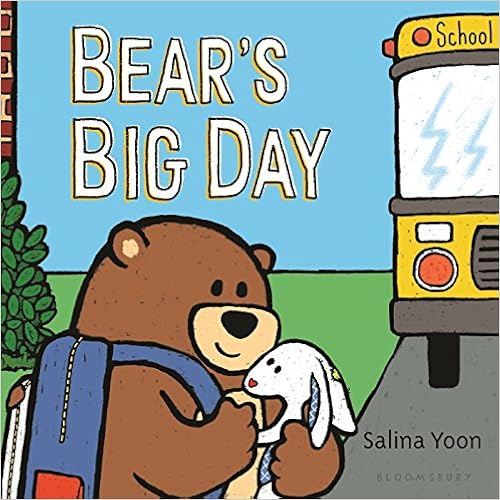
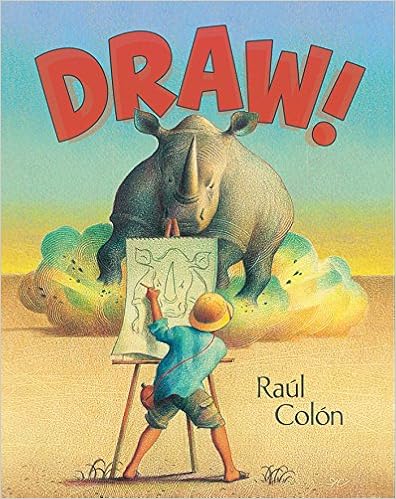
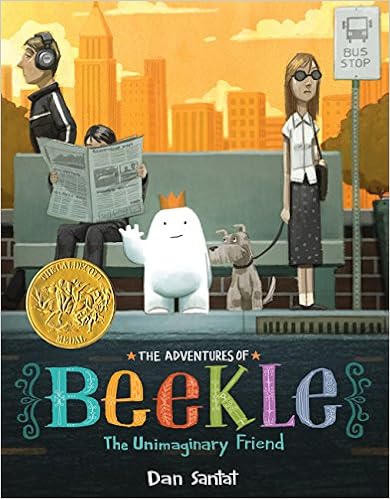
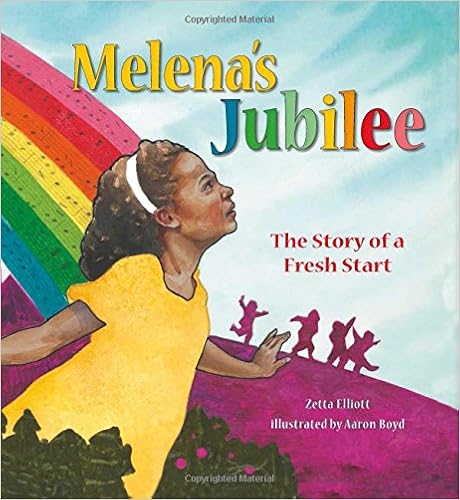
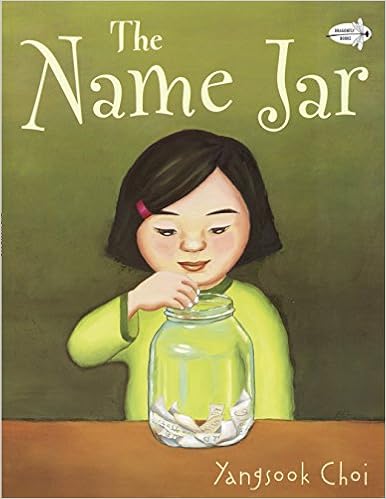
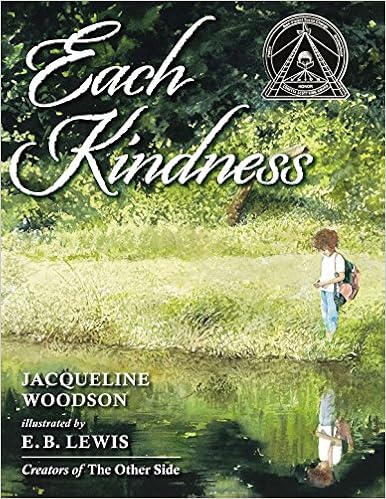
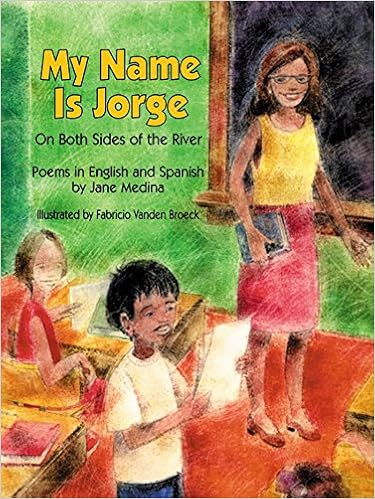
Rethinking Our Beginning of the Year Read-alouds

Hello, all!

     As we're gearing up for another school year, I like many of you have been searching online for beginning of the year activities and read-alouds, thinking, "What should I keep from last year? What can I change to make the beginning of the year more successful for my students?"

     Looking through all of the back-to-school read-alouds, I was struck by something I honestly should have noticed long before this...they are all written by white authors with primarily white characters.  And I got to thinking, "Has the practice of beginning the year reading books depicting white students and authors given my students the impression that school success is for white students only?  Have I (whether consciously or unconsciously) been telling my students of color that my classroom, and maybe school in general, isn't really for them?"

     That's not to say that the books listed on the typical back-to-school read-aloud list aren't good books. Many of them are. I personally love First Day Jitters, The Recess Queen, Enemy Pie, and Spaghetti in a Hot Dog Bun. However, in the same way that high school literature teachers are looking to rethink the "classic" texts long thought of as required reading in order to include great literature written by women and authors of color (see #disrupt texts movement), shouldn't elementary school teachers also be rethinking what we consider to be "classic" read-alouds? 

     For myself, the answer is, of course, yes. I did a little digging online and in my local library and found some great beginning of the school year read-alouds featuring diverse characters brought to life by diverse authors.  (One of my pet peeves is "diverse" literature written by middle class white Americans. Just because we went on a mission trip in a different country, grew up in a diverse neighborhood, or have a spouse/best friend/other family member of color does not qualify us to write from their point of view or tell their stories. Sorry.)

    So, here are a few great stories that I will be adding to my repertoire of back-to-school read-alouds.  I hope you'll find a few that speak to you.  Diversity adds to all of our lives and opens us up to new experiences and different points of view that enrich our souls and help us better understand our fellow human beings.

 Click on the pictures to find out more about each:


    The Day You Begin by [Woodson, Jacqueline]                        


Enjoy!!  And best wishes for a successful start to the new school year!!
Jacquie  

Wednesday, February 1, 2017

So, this Muslim ban...

People displaced from Darfur's conflict arrive at Shangel Tubaya in 2010.

Like most of you, my news feed has been filled with articles and op-ed's about Trump's immigration ban that targets seven majority Muslim countries--Iraq, Iran, Syria, Sudan, Somalia, and Libya.  If you're reading this blog, I assume you have some ties to ELL's, and so you probably know immigrants from at least one, if not all, of these countries.  If you teach ELL's, as I do, you probably also have students from at least one of these countries, and you're outraged and hurting for your students and their families, as well as your friends and neighbors who are impacted by this executive action.

Maybe you've written e-mails or postcards, made phone calls, donated to causes, or attended a rally in opposition to this action.  I hope you have. Want to do something? Click here to find out who your representatives are.  Need to contact your Senators?  Click here.

Anyway, last night while I was trying to sleep with my mind repeating the news cycle in my head, I realized that while this anti-Muslim action is upsetting to me personally, it is so much more so to my young students.  I'm heartbroken and ashamed by the actions of my country, and I'm mature enough to fully understand the ramifications of this action.  However, my family and I are in no danger of being forced to leave our homes, nor do we fear for the safety of loved ones in other countries.  My students are not able yet, at their young age, to understand all of the information that has been in the news, and they and their families ARE directly impacted by the immigration ban.  So, my thoughts shifted to how I was feeling towards what can I do to help my students through this painful and scary time?

I got up out of bed and started doing some research.  I'm not a counselor, so I'm not in a position to determine the best ways to talk to students about the ban and how it affects them.  I began my search by looking for tips from professionals on talking to young children about tragedies in the news.  I found a wealth of information that not only supported my instincts for how to proceed (I do have a kid, so I'm not new to this!!), but I also found some helpful tips that I hadn't considered.

I read and reflected, and then compiled a list of what I felt were the most useful and pertinent tips for helping younger students (elementary and middle school aged) work through the immigration ban:

  1. Do not bring up the immigration ban.  If your students raise the issue, proceed!
  2. Ask your students what they already know.
  3. Ask your students what, if any, questions they have. When answering questions, be careful to only answer with information you know for sure to be true.  It's okay to tell children that you don't know the answer.  Also, begin with the basics.  Children may not be ready for the full details, so start small.  If your students have additional questions, they can continue to probe until they're satisfied, but we don't want to overwhelm them with information.  Again, we don't know a lot of information yet about the ban and how it will all shake out in the end, so only give answers you know with certainty are true and verifiable.
  4. If you feel comfortable, let your students know that you also feel sad about what is going on and that you are happy that they and their family are here with us in the U.S.  They have probably heard, if not experienced, the hateful rhetoric currently being spewed in our country. Let them know that you are on their side and that their school family supports them 100% (if this is the case. And I hope it is.)
  5. Reassure your students as much as you are able.  Let them know that there are grown-ups working very hard on the issue, and that there is hope that things will be okay.
  6. Most importantly, listen.  If a student honors you with their trust, sit quietly, listen, and validate their feelings.  It's important to clear up any misunderstandings, but it's also important that we not belittle their feelings with a trite, "It's all going to be okay. Don't worry." 
I know, as educators and as parents, this is a tall order.  How do you reassure your students when so much of our country's current political climate is eroding their sense of safety and belonging?  The answer is that there is no easy answer.  We need to surround them with love, make sure they feel safe and welcomed while they are at school, speak out if we hear hateful misinformation in any area of our lives, and continue to give our students the education they deserve so that one day they can be in a position to make sure actions like Trump's immigration ban don't happen again.

Here are the articles I pulled information from:

Yours in solidarity,
Jacquie

Sunday, January 23, 2011

Buba Leah and Her Paper Children by Lillian Hammer Ross


A warning up front: this book made me cry!  Lillian Hammer Ross captures the mixture of sadness and joy that is felt by families separated by immigration.  Buba Leah's children have moved to America, leaving her with paper children: the letters they send her from America.  She keeps them in a special box and shares them with the daughter of her neighbors, Chava.  One afternoon, the postman delivers a special letter to Buba Leah.  Enclosed in the envelope are two tickets for passage to America: one for Buba Leah and one for Chava.  Chava must leave her parents behind in Russia and become a paper child herself in order to have a better life.  The illustrations by  Mary Morgan help convey the emotion of the story, drawn in the characters' faces.

Some ideas for the ESL classroom:
  • Using the illustrations, discuss past and present
  • Discussion of students' own family members left behind in their home country
  • Making predictions: What are the paper children?  What is in the special letter of Buba Leah?  Will Chava leave her parents to go to America?
  • Character development: What kind of person is Buba Leah?  How do we know that?  What does the author tell us about her?
  • Vocabulary that may be tricky for ELL's: porch, linen, challah, Sabbath, frightened, wondered, snuggled, wagon, blossom, tickets, mingled, journey, mazel tov
Exploring the form and function of friendly letters would be a great writing activity to go along with this book.  Students could learn the format and then write letters to family members.  For emerging writers, help students write a letter as a class on chart paper, maybe to the school principal or librarian, for example. 

Keep in mind, this topic may make students sad, but that's no reason to avoid it.  The ESL classroom may be the only place in school that your students feel comfortable talking about loved ones that they miss back in their home countries.  Encourage children to share as much as they would like.  You might be surprised at how close you will grow to them! 

Happy reading!
Jacquie

Thursday, January 20, 2011

I Hate English by Ellen Levine


I Hate English by Ellen Levine is a story about a young Chinese girl, Mei Mei, who experiences culture shock when she moves to the United States.  Her sadness is manifested in her dislike of English.  To Mei Mei, English letters fight and bang into each other.  When an American teacher comes to the Chinatown Learning Center to work with her in English, Mei Mei becomes angry because she fears that if she learns English, she will lose her Chinese identity.  The story ends with Mei Mei appreciating her bilingualism.


This story is an excellent one to read with all students, but will especially resonate with recent immigrants.  Students can use the book as a springboard for discussing their own experiences with learning English, as well as to share their own native languages with classmates.


Ideas for the ESL classroom:
  • Background knowledge: words we know in other languages; write on chart paper and post in the room
  • Character development: How does Mei Mei change throughout the story?  How does the author show Mei Mei's feelings?  Check predictions.
  • Making predictions: Looking at the cover, what do you think the story will be about?  How do you think Mei Mei will respond to the English teacher?  Do you think Mei Mei will learn to like English?
  • contractions
  • proper nouns
  • Vocabulary that may be tricky for ELL's: lonely, noise, bang, sound, strokes, tutors, arithmetic, ping pong, checkers, post office, pails, shellfish, stared, glared, continued, suddenly, strange, invisible

Some Writing Activities for students to respond to the story include making an English/ native language dictionary.  The students could begin their dictionaries at school using agreed-upon words with illustrations and then take the dictionaries at home to work on with their families.  Students could also create a chart about how certain words in English sound (banging, hard, soft, ringing, fuzzy).  Students may want to journal about how they feel learning English, including both likes and dislikes.  They could use their journal responses to create a brochure about learning English.


Happy reading!
Jacquie

Tuesday, January 11, 2011

The Color of Home by Mary Hoffman


The Color of Home by Mary Hoffman is picture book about a little boy from Somalia who moves to the U.S. and tries to adjust to his new life.  The illustrations for the book are done in vibrant watercolors (by Karin Littlewood) that truly capture the emotions of the main character, Hassan.  In the story, Hassan struggles with the sadness not only of leaving his home, but also of what he experienced in Somalia before coming to the U.S.  Through a Somali translator that comes to his school to work with him, Hassan is able to tell his story of leaving behind violence in Somalia in which his uncle is killed, living in a refugee camp in Mombasa and finally leaving behind his cousins and grandparents to move to the U.S., a country that "seemed all cold and gray."  Of course, this being a children's book, at the end of the story Hassan begins to come to terms with his new life and the colors of his new country begin to emerge.

Ideas for the ESL classroom:
  • story elements
  • problem and solution (what is Hassan's problem at the beginning of the story and how is it solved?), 
  • comparing and contrasting (Somalia with America, students' own experiences with Hassan's, schools in the U.S. vs. other countries, food in the U.S. vs. home country) 
  • character development and change (how does Hassan change and grow throughout the story?)
  • the technique of story within a story can be explored, as Hassan tells about his life in Somalia within the story of his life in the U.S.
  • transition words (next, then, the next day, that afternoon, tomorrow)
  • adjectives (especially the use of color)
  • Vocabulary that may be tricky for ELL's:
    • verbs: shivered, smudged, spoiled, disappeared
    • art vocabulary: easels, bottle' stick figures, smudged
    • nouns: bundle, flock, creature, luggage, camp, stroller
    • adjectives: murky, awful, frightened, spindly, maroon
    • cultural vocabulary: hajab, qu'ran, prayer mat
An easy writing activity to respond to the story would be to ask students to write about their own experiences moving to the U.S.  This could be a journal-type activity or a more formal writing activity in which students take the piece through the writing process.  Younger students could paint a picture of their home country and write (or dictate to the teacher) a few words or a sentence describing their pictures.  Emphasis on the use of colors (as well as color vocabulary) would add another dimension.

Happy reading!
Jacquie