Showing posts with label reading. Show all posts

Thursday, August 2, 2018

Rethinking Our Beginning of the Year Read-alouds

Hello, all!

     As we're gearing up for another school year, I like many of you have been searching online for beginning of the year activities and read-alouds, thinking, "What should I keep from last year? What can I change to make the beginning of the year more successful for my students?"

     Looking through all of the back-to-school read-alouds, I was struck by something I honestly should have noticed long before this...they are all written by white authors with primarily white characters.  And I got to thinking, "Has the practice of beginning the year reading books depicting white students and authors given my students the impression that school success is for white students only?  Have I (whether consciously or unconsciously) been telling my students of color that my classroom, and maybe school in general, isn't really for them?"

     That's not to say that the books listed on the typical back-to-school read-aloud list aren't good books. Many of them are. I personally love First Day Jitters, The Recess Queen, Enemy Pie, and Spaghetti in a Hot Dog Bun. However, in the same way that high school literature teachers are looking to rethink the "classic" texts long thought of as required reading in order to include great literature written by women and authors of color (see #disrupt texts movement), shouldn't elementary school teachers also be rethinking what we consider to be "classic" read-alouds? 

     For myself, the answer is, of course, yes. I did a little digging online and in my local library and found some great beginning of the school year read-alouds featuring diverse characters brought to life by diverse authors.  (One of my pet peeves is "diverse" literature written by middle class white Americans. Just because we went on a mission trip in a different country, grew up in a diverse neighborhood, or have a spouse/best friend/other family member of color does not qualify us to write from their point of view or tell their stories. Sorry.)

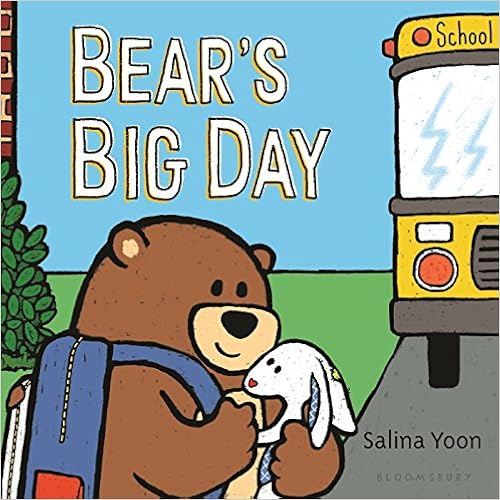
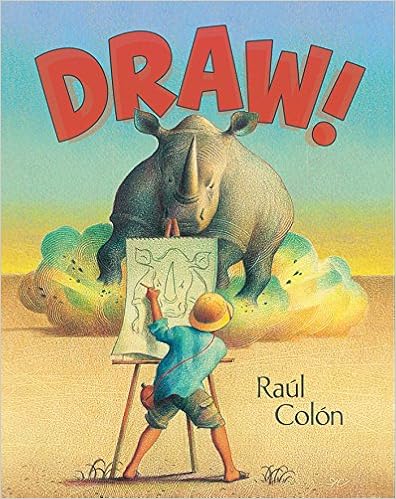
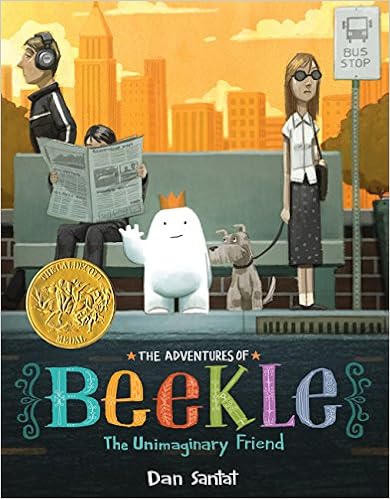
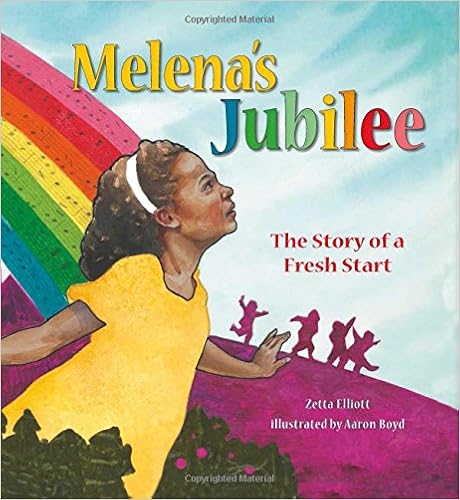
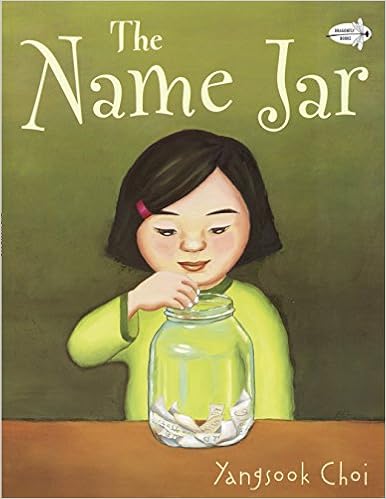
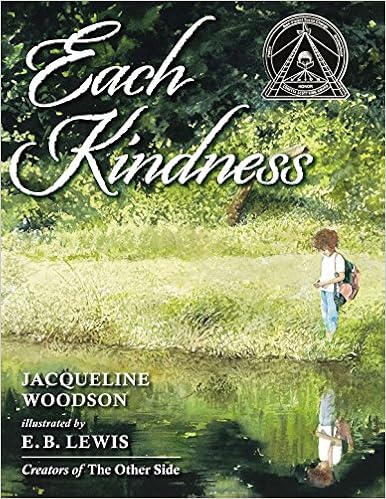
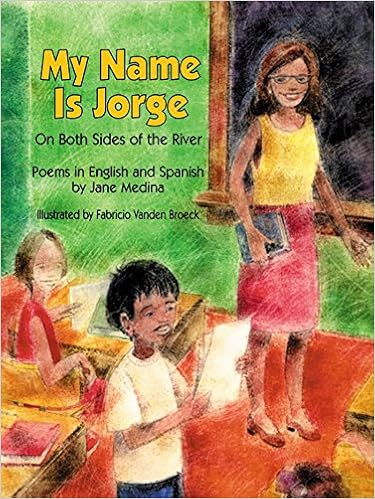
    So, here are a few great stories that I will be adding to my repertoire of back-to-school read-alouds.  I hope you'll find a few that speak to you.  Diversity adds to all of our lives and opens us up to new experiences and different points of view that enrich our souls and help us better understand our fellow human beings.

 Click on the pictures to find out more about each:


    The Day You Begin by [Woodson, Jacqueline]                        


Enjoy!!  And best wishes for a successful start to the new school year!!
Jacquie  

Monday, April 29, 2013

Choosing Texts for Early Readers

As an ELL teacher, choosing texts to use with my students is perhaps one of the most challenging parts of my job.  Each week, I struggle with how to focus my text selection: vocabulary topics?  grammar function?  fluency?  literary devices?  And then, from where should I pull the texts: guided reading room?  library?  from the same publisher each time, or mix and match?  In her book Becoming Literate, Marie Clay asserts that "it is the individual child's achievements and where he next needs to go that [should govern] the selection" (p. 182).  So, with the multitude of information our lower-level ELL's need to know, how do we choose a text that will meet their needs, but still foster a love of reading?

Some tips from Marie Clay:
  • Use texts you have previously read to students.  Known texts are "still new and challenging because the child is bringing that prior knowledge to the text...using a different kind of support from the interactive sharing of the task with the teacher" (p. 184).  Be sure to couple the re-reading of the text with a new focus.  If the original sharing of the book focused on vocabulary, have the re-reading experience tackle a literary device used by the author.
  • Be wary of using contrived texts: "If [students] have only read controlled vocabulary texts [they] will have difficulty with texts that do not control the vocabulary" (p. 187).  Relying on contrived texts can also have a detrimental effect on oral language development if students learning English are presented with one way of "speaking" English in texts and then are expected to understand and respond to the language those around them produce naturally. 

  • Story books should be an integral part of a student's reading journey, but should not be the only method used to teach students to read. "To learn to anticipate the language and situations found in stories children have to build up a vast experience with children's story books...Some children do not get those experiences before they come to school and teachers who use a story book reading programme must provide them with make-up experiences" (189).  ELL's often come to school with very little knowledge of story structure or the purpose of reading.  It's therefore imperative that we provide as many opportunities for our students to interact with quality literature as possible.  However, story books are not often written for beginning readers to read on their own.  Portions could be read by students in a big-book or projectable format.  Language Experience Approach texts could be created by students based on the story books to give students a pathway into the text.

  • While LEA's do give children who are learning English a textual experience with which they can connect, "it is not enough to read only natural language or language experience texts.  Children need book experience to read books.  Book language has different forms and different frequencies of occurrence from spoken dialects.  Natural language texts can be regarded as transitional texts, used when the child is just beginning to relate what he knows about oral language and print to the written texts he is trying to read"  (p.191).

For slower readers and those who are learning to read while at the same time learning English, natural experience texts and repeated contact with familiar literary texts initially presented by teacher are a natural starting point for literacy development.  Consistently working only with simple, controlled material can "develop habitual responding for that type of material.  This learning will not transfer readily to more complex texts" (195).  Staying away from such contrived texts is especially critical for ELL's.  Students must be exposed to rich language use and have the opportunity to swim around in it and be immersed.  This is the only way their oral language, and then later their written language, will develop to the depth of meaning that native English speakers enjoy.

Happy reading,
Jacquie

Monday, April 8, 2013

Directionality and Storybook Reading

In Chapter 6 of Becoming Literate, Marie Clay writes that children face three main challenges after their initial experiences with print.  One of those challenges is the directionality of print.  In English text, of course, this means learning that print goes left to right.  Period.

I hadn't considered this skill to be anything unusual for children to learn until Clay opened my eyes: "The child's everyday experience has actually trained him in different habits from those he needs in reading.  An orange, a dog or a favourite toy must be recognized from any viewing angle.  Meaning is constant when the object is small or large, is upside-down, back-to-front, or sideways to the viewer...On entry to school he has to learn that in one particular situation, when he is faced with printed language, flexibility is inappropriate."  (Clay, 1991).  DUH!  I had never thought of directionality in reading as something entirely foreign in its adherence to one serial direction in the world of a child for whom every other experience has been multi-directional.

After that "ah-ha" moment, I decided to check out whether or not my kindergarten students truly understood the directionality of print.  Using the Sulzby Storybook Reading Assessment, I had my students read a Goldilocks book to me.  The students were already familiar with the text from a read aloud the previous week.  The book has multiple lines of print on each page, so I was able to gauge whether or not students had learned the following:
  • directionality
  • return sweep
  • high frequency words
  • using pictures to gain meaning
  • the language "style" of story telling
In addition, I was also able to take notes on what aspects of oral English the students have acquired.  For example, whether or not they correctly form and use plural nouns or regular past tense verbs. 

The Sulzby assessment taught me a lot about my students!  I was surprised to learn that one of my students has not yet mastered directionality.  Not surprisingly, he was also the only one who didn't use the pictures to tell a story, but rather just labeled what he saw in each picture.  He jumped back and forth between right and left pages of the book and only attended to the pictures.  He paid no attention to the print.  My other two kindergarteners demonstrated knowledge of each of the skills I was assessing.  One of the students even made a serious attempt to read each word on the page, and he did a great job of it!

Now, I know which of my students are ready to move on, and which needs more work with simple, one lined texts and retelling stories after read alouds.  I highly recommend reading the Sulzby article (link above) and trying this assessment with emergent readers.

Happy reading!
Jacquie

Monday, April 1, 2013

Islands of Certainty

The title of this blog post is one of my favorite Marie Clay-isms: "islands of certainty."  She writes that "in the familiar story the child locates a word he knows and builds a response around it.  Then the child's reading of text comes to be controlled by particular words even though he can only recognize one or two words" (Clay, 1991).  These familiar words are the "islands of certainty" in a sea of unknown text.  Often, for emerging readers, these islands are sight words.

If you visit pinterest, you'll find a plethora of sight word games and activities geared to helping children memorize these most common words in English text.  However, the majority of the activities involve memorizing the words out of context.  For ELL's, sight words are often meaningless, so it's imperative that literacy teachers of ELL's focus on meaning and usage when teaching sight words and present the words in connected text.

Introducing new sight words doesn't need to be overly complicated, even when working with emergent language learners.  For example, when working with my first grade emergent students, I introduce new sight words with the following 5-day procedure:
  1. Oral language practice: I write five new sight words on index cards.  We practice reading them out loud.  I use each word in a sentence or two as examples.  Then, the students all use each word in a sentence.  My students love making up sentences so well that they usually have multiple sentences for each word!  This is not only a great way for the students to get oral language practice, but it's also an opportunity for me to ensure that the students truly understand what each word means and how to use it.  I can gently correct any misunderstandings before they become fossilized.
  2. Words in context: I write sentences with each sight word on sentence strips that I post on the board.  The sentences are taken from those that the students invented the day before.  We read the sentences together out loud.  Then, the students choose one of the sentences to re-read with expression.  This is also a big hit!
  3. Guess the covered word: I cover or remove the targeted sight word from each sentence, and the students have to choose the correct word to go in the sentence.  We then do the same procedure with new sentences using the targeted sight words.
  4. Writing sentences: Students write sentences of their own using each of the targeted sight words.  Then, they share their favorite with their classmates.
  5. Fast ten: This is a quick check of the new sight words and a few known sight words.  Students write the words on white boards as quickly as they can.  They only win "points" if they not only write the word quickly, but also correctly.
Throughout the week, we find and circle the targeted sight words in our focus story and in our shared writing.  This gives students many more examples of the use of sight words in connected text.

I keep a list of the sight words that I've taught to the group.  When I read with each student individually each week, I double and triple-check that these "islands of certainty" remain not only in the students' reading repertoire, but that they are also using those sight words correctly in their oral language.  The one-on-one time I eke out to read with each student gives me the perfect venue for checking progress on a number of skills.  Carving out that time isn't easy, but it's well worth the effort!

For more activity ideas that use connected text to teach new words to ELL students, check out Phonics They Use by Patricia Cunningham.

Happy reading,
Jacquie

Sunday, March 10, 2013

Language Experience Approach and Dr. Seuss


In honor of Dr. Seuss's birthday, for the past two weeks my reading instruction has centered around texts my students created after repeated readings of The Sneetches, And to Think That I Saw It on Mulberry Street, and Green Eggs and Ham.  I used the Language Experience Approach with students to create texts on their level that we could read and work with all week.  In their article, The Power of Language Experience for Cross-Cultural Reading and Writing, authors David Landis, Joanne Umolu and Sunday Mancha assert that LEA is "a means of providing interesting and relevant texts for diverse students' reading and writing."  I often use LEA when I want to introduce my students to rich literature that is too vocabulary dense to be an appropriate text for them to work with independently.

My kindergarten students listened to and (even during the first reading!) helped me read Green Eggs and Ham.  We used the book to study transportation and food vocabulary, most of which were new to my students.  Then, we wrote a very simple text together about foods we don't like to eat.  Every few lines, we threw in their favorite refrain, "I will not eat it here or there.  I will not eat it anywhere."  They gleefully shouted those lines when we came to them.  Using our Language Experience Approach-created text, students took turns tracking the words and performing the return sweep while reading.  We also used their text to practice counting words in a sentence and to identify words they knew using word swatters.  This was a quick way to take notes on which of my kindergarteners are still working on many of these Concepts About Print, and which have already mastered them.

In first grade, we read The Sneetches.  We're in the middle of a unit on friendship, so this book fit in nicely!  In addition to focusing on the theme of the book (not judging others by what's on the outside), we also wrote a summary of the book that we used as one of our texts this week.  Two of my first graders are still working on one to one matching and recognizing kindergarten sight words, so that was their focus with our word work this week.  My other students are working on r-controlled vowels and transition words like "First", "Next", "Then", so they worked with those skills.  Language Experience texts give teachers the opportunity to use one text to work with students at a variety of levels, which is very helpful in an ESL pull-out class setting.  We often have limited time (30-40 minutes) and multiple levels of language proficiency in our small groups, so being able to use one text to teach many skills makes better use of our precious time!

My second grade students also created a Language Experience text, but theirs was a different format.  Before I read And to Think That I Saw It on Mulberry Street, I explained to students that the story was about a boy who, when walking home from school, imagines all the wonderful things he could see.  We then made a list of all of the things they see on their bus ride home from school.  Once we made our list, I read them the book.  We discussed the differences between what the boy imagines he could see and what we really see on our way home each day.  The following day, I re-read the book.  We then made a list of the imagined sights along Mulberry Street.  The students then made lines to compare similar items in the lists.  We talked about why it's important to make connections while we read.  The students completed our book study by writing their own version of the book: And to Think That I Saw It on Walnut Street (our school's street name).  We published the stories and hung them in the hallway for our friends to read.

LEA gave my students the opportunity to work with great literature at their level.  By taking their ideas and thoughts about what we read together, I was able to correct grammar in a natural, conversational setting, encourage the use of new vocabulary, and demonstrate to students that their words and thoughts are worthy of study.  All in all, a fun and successful week using the Language Experience Approach to make Dr. Seuss's lovely literature accessible to my students learning English. 

Happy reading,
Jacquie

Saturday, April 21, 2012

Boost Reading Skills With One Small Change


An OSU study found that making one little change to reading aloud--referencing print--boosts children's reading skills later on. Interesting! Is this something you do when you read aloud to your students? your children?