Showing posts with label education. Show all posts

Thursday, August 2, 2018

Rethinking Our Beginning of the Year Read-alouds

Hello, all!

     As we're gearing up for another school year, I like many of you have been searching online for beginning of the year activities and read-alouds, thinking, "What should I keep from last year? What can I change to make the beginning of the year more successful for my students?"

     Looking through all of the back-to-school read-alouds, I was struck by something I honestly should have noticed long before this...they are all written by white authors with primarily white characters.  And I got to thinking, "Has the practice of beginning the year reading books depicting white students and authors given my students the impression that school success is for white students only?  Have I (whether consciously or unconsciously) been telling my students of color that my classroom, and maybe school in general, isn't really for them?"

     That's not to say that the books listed on the typical back-to-school read-aloud list aren't good books. Many of them are. I personally love First Day Jitters, The Recess Queen, Enemy Pie, and Spaghetti in a Hot Dog Bun. However, in the same way that high school literature teachers are looking to rethink the "classic" texts long thought of as required reading in order to include great literature written by women and authors of color (see #disrupt texts movement), shouldn't elementary school teachers also be rethinking what we consider to be "classic" read-alouds? 

     For myself, the answer is, of course, yes. I did a little digging online and in my local library and found some great beginning of the school year read-alouds featuring diverse characters brought to life by diverse authors.  (One of my pet peeves is "diverse" literature written by middle class white Americans. Just because we went on a mission trip in a different country, grew up in a diverse neighborhood, or have a spouse/best friend/other family member of color does not qualify us to write from their point of view or tell their stories. Sorry.)

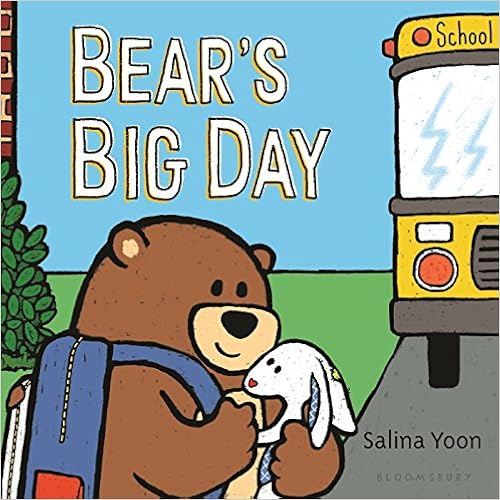
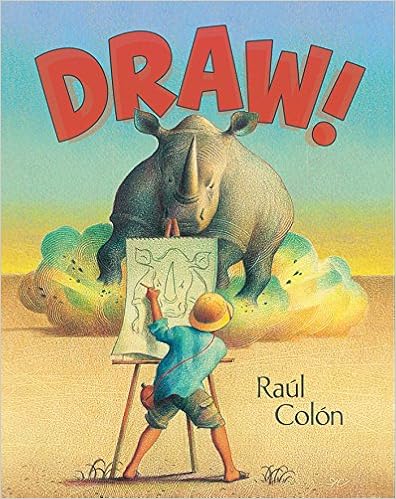
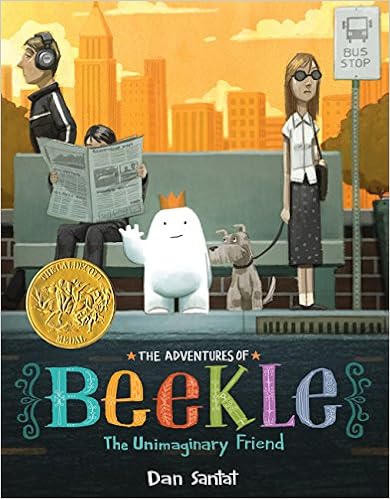
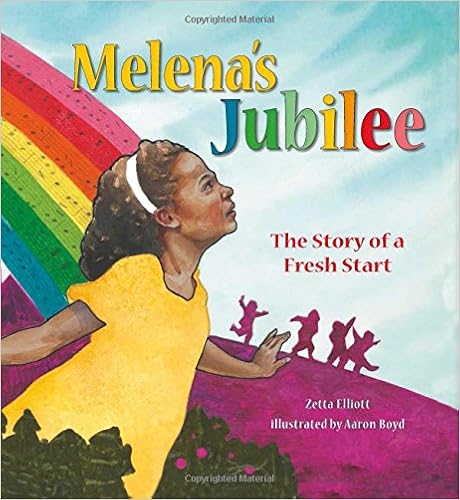
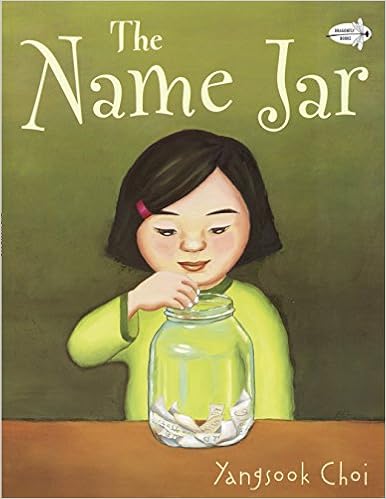
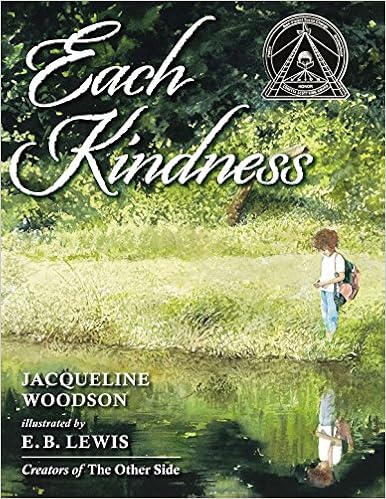
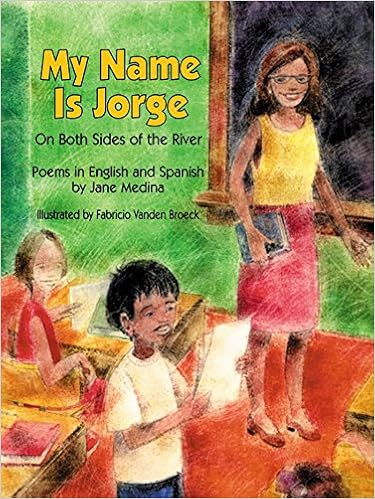
    So, here are a few great stories that I will be adding to my repertoire of back-to-school read-alouds.  I hope you'll find a few that speak to you.  Diversity adds to all of our lives and opens us up to new experiences and different points of view that enrich our souls and help us better understand our fellow human beings.

 Click on the pictures to find out more about each:


    The Day You Begin by [Woodson, Jacqueline]                        


Enjoy!!  And best wishes for a successful start to the new school year!!
Jacquie  

Friday, July 13, 2018

Hi, all!

     It's been a while!!  I moved to Florida last year, and spent the last school year as a fourth grade classroom teacher.  It has been 14 years since I was a classroom teacher, and the standards have changed a lot!  Luckily, the majority of my students were ELL's (21 out of 25), so at least some of my ESOL experience was helpful!  Now that I've moved to Florida and am a classroom teacher, rather than solely an ESOL teacher, I need to learn more about teaching all of my students; most especially my US-born students of color.  Luckily for all of us, there are many educators out there who have been doing the work of researching and writing about the issues that impact students of color in public school classrooms. Our job is to listen, learn, and incorporate what these educators know in order to elevate our practice.
     

     With that, here we go! 


     I have some suggestions for a starting place for those of you just entering the world of social justice and education. For those of you that have been in this world for a while, you probably know most of these amazing educators already!

     Many fantastic educators impart their wisdom on twitter. I have several suggestions for you to follow. You'll get links to articles and books that will aid you on your journey to becoming a more culturally responsive teacher. I'll be talking about many of those resources here on my blog, reflecting on what the information in them means for me as a teacher as well as for my students. (This is not an exhaustive list, and people are listed in no particular order.)

     Anyway, here are some people to follow (you won't be disappointed!):

    • Laura M. Jimenez
    • Marian Dingle
    • Ebony Elizabeth
    • Christopher Emdin
    • Jose Luis Vilson
    • Shana V. White
    • Val Brown
    • Xian Franzinger Barrett
    • Lynell Powell
    • Sara K. Ahmed
    • Mariana Souto-Manning
    • Leigh Patel
    • Kim Parker
    • Sabrina Joy Stevens
    • Cornelius Minor
    • Dulce-Marie Flecha
    • Kelly Wickham Hurst
    • Julia E. Torres
    • Clint Smith
    • Rosa Perez-Isaiah
    • Rebekah Cordova
    • EduColor Movement
    • Teaching Tolerance
    • HipHopEd
    • Teaching for Change
    • All Y'all Social Justice Series
    • Rethinking Schools


    Anyone you follow that is not on my list?  Please share!!
    💜 Jacquie

    Monday, April 29, 2013

    Choosing Texts for Early Readers

    As an ELL teacher, choosing texts to use with my students is perhaps one of the most challenging parts of my job.  Each week, I struggle with how to focus my text selection: vocabulary topics?  grammar function?  fluency?  literary devices?  And then, from where should I pull the texts: guided reading room?  library?  from the same publisher each time, or mix and match?  In her book Becoming Literate, Marie Clay asserts that "it is the individual child's achievements and where he next needs to go that [should govern] the selection" (p. 182).  So, with the multitude of information our lower-level ELL's need to know, how do we choose a text that will meet their needs, but still foster a love of reading?

    Some tips from Marie Clay:
    • Use texts you have previously read to students.  Known texts are "still new and challenging because the child is bringing that prior knowledge to the text...using a different kind of support from the interactive sharing of the task with the teacher" (p. 184).  Be sure to couple the re-reading of the text with a new focus.  If the original sharing of the book focused on vocabulary, have the re-reading experience tackle a literary device used by the author.
    • Be wary of using contrived texts: "If [students] have only read controlled vocabulary texts [they] will have difficulty with texts that do not control the vocabulary" (p. 187).  Relying on contrived texts can also have a detrimental effect on oral language development if students learning English are presented with one way of "speaking" English in texts and then are expected to understand and respond to the language those around them produce naturally. 

    • Story books should be an integral part of a student's reading journey, but should not be the only method used to teach students to read. "To learn to anticipate the language and situations found in stories children have to build up a vast experience with children's story books...Some children do not get those experiences before they come to school and teachers who use a story book reading programme must provide them with make-up experiences" (189).  ELL's often come to school with very little knowledge of story structure or the purpose of reading.  It's therefore imperative that we provide as many opportunities for our students to interact with quality literature as possible.  However, story books are not often written for beginning readers to read on their own.  Portions could be read by students in a big-book or projectable format.  Language Experience Approach texts could be created by students based on the story books to give students a pathway into the text.

    • While LEA's do give children who are learning English a textual experience with which they can connect, "it is not enough to read only natural language or language experience texts.  Children need book experience to read books.  Book language has different forms and different frequencies of occurrence from spoken dialects.  Natural language texts can be regarded as transitional texts, used when the child is just beginning to relate what he knows about oral language and print to the written texts he is trying to read"  (p.191).

    For slower readers and those who are learning to read while at the same time learning English, natural experience texts and repeated contact with familiar literary texts initially presented by teacher are a natural starting point for literacy development.  Consistently working only with simple, controlled material can "develop habitual responding for that type of material.  This learning will not transfer readily to more complex texts" (195).  Staying away from such contrived texts is especially critical for ELL's.  Students must be exposed to rich language use and have the opportunity to swim around in it and be immersed.  This is the only way their oral language, and then later their written language, will develop to the depth of meaning that native English speakers enjoy.

    Happy reading,
    Jacquie

    Monday, April 1, 2013

    Islands of Certainty

    The title of this blog post is one of my favorite Marie Clay-isms: "islands of certainty."  She writes that "in the familiar story the child locates a word he knows and builds a response around it.  Then the child's reading of text comes to be controlled by particular words even though he can only recognize one or two words" (Clay, 1991).  These familiar words are the "islands of certainty" in a sea of unknown text.  Often, for emerging readers, these islands are sight words.

    If you visit pinterest, you'll find a plethora of sight word games and activities geared to helping children memorize these most common words in English text.  However, the majority of the activities involve memorizing the words out of context.  For ELL's, sight words are often meaningless, so it's imperative that literacy teachers of ELL's focus on meaning and usage when teaching sight words and present the words in connected text.

    Introducing new sight words doesn't need to be overly complicated, even when working with emergent language learners.  For example, when working with my first grade emergent students, I introduce new sight words with the following 5-day procedure:
    1. Oral language practice: I write five new sight words on index cards.  We practice reading them out loud.  I use each word in a sentence or two as examples.  Then, the students all use each word in a sentence.  My students love making up sentences so well that they usually have multiple sentences for each word!  This is not only a great way for the students to get oral language practice, but it's also an opportunity for me to ensure that the students truly understand what each word means and how to use it.  I can gently correct any misunderstandings before they become fossilized.
    2. Words in context: I write sentences with each sight word on sentence strips that I post on the board.  The sentences are taken from those that the students invented the day before.  We read the sentences together out loud.  Then, the students choose one of the sentences to re-read with expression.  This is also a big hit!
    3. Guess the covered word: I cover or remove the targeted sight word from each sentence, and the students have to choose the correct word to go in the sentence.  We then do the same procedure with new sentences using the targeted sight words.
    4. Writing sentences: Students write sentences of their own using each of the targeted sight words.  Then, they share their favorite with their classmates.
    5. Fast ten: This is a quick check of the new sight words and a few known sight words.  Students write the words on white boards as quickly as they can.  They only win "points" if they not only write the word quickly, but also correctly.
    Throughout the week, we find and circle the targeted sight words in our focus story and in our shared writing.  This gives students many more examples of the use of sight words in connected text.

    I keep a list of the sight words that I've taught to the group.  When I read with each student individually each week, I double and triple-check that these "islands of certainty" remain not only in the students' reading repertoire, but that they are also using those sight words correctly in their oral language.  The one-on-one time I eke out to read with each student gives me the perfect venue for checking progress on a number of skills.  Carving out that time isn't easy, but it's well worth the effort!

    For more activity ideas that use connected text to teach new words to ELL students, check out Phonics They Use by Patricia Cunningham.

    Happy reading,
    Jacquie

    Saturday, February 16, 2013

    Oral Language Development and Reading Readiness


    Marie Clay, expert on emergent literacy, emphasizes the importance of oral language skills in the development of reading readiness in young children.  In her book Becoming Literate, she writes, "Children who have been read to a great deal will already know, in some way, that the language of books is different from the language that they speak.  They will be developing 'an ear' for bookish or literary forms of language." (p. 28).   Children who are read to at home easily figure out that the pictures tell a story and can create a story based on pictures.  So, what do we do about children who have never heard a story read aloud until beginning kindergarten?

    The majority of ELL's that I've worked with over the years have parents with little to no educational experience.  Many of them are illiterate in their own language, as well as in English. That leaves the important work of developing that early reading readiness to the children's first teachers.  Marie clay posits that "most difficulties in learning to read stem from inappropriate experiences rather than from impaired structures.  Unfortunately they are equally difficult to overcome." (p. 43).  As teachers of ELL's, we need then to step up our practice to include dedicated time spent creating meaningful opportunites for students to develop their oral language. 

    Marie Clay has also researched school entry, which is a very different experience for non-English speaking children--whether immigrants themselves or the children of immigrants--from low-income families.  Many of their parents have little, if any, experience with school and so do not prepare their children for school the way that many "typical" US families do.  So the teacher must take each child's individual experiences prior to beginning school and build upon those so that all of the students have common experiences to share.  "Schools have created policies which exclude unready children from opportunities to learn to be ready.  Sometimes they are found to be unready to attend school; sometimes they are retained in a class where they did not learn in the hope that second time around something surprising will happen.  Schools demand from the child performances which the school itself should be developing." (p. 68)

    So, what then do we do to build the oral language and early reading experiences children need to be successful readers?  For one, we know that awareness of rhyme and alliteration has a positive correlation to reading and spelling success.  Children who start school already knowing, for example, nursery rhymes, have a leg up on children who start school without this knowledge.  Poetry should be an integral part of our early instruction of ELL's who are learning to read.

    There are many oral language development resources available for teachers and parents/caregivers.  Here are a couple that I found to be useful:

    Tips on promoting oral language development with students:
    http://www.med.unc.edu/ahs/clds/files/early-childhood-resources/Promoting%20Oral%20Language%20Development.pdf

    Fun oral language activities that promote reading readiness:
    http://www.literacyconnections.com/OralLanguage.php

    Happy reading!
    Jacquie

    Monday, March 12, 2012

    Using 365 Projects to Promote Learning for ELL's


    Many of my friends have gotten into a 365 Project or two, and while I've admired their work, I never considered doing one myself until today.  First of all, what is a 365 Project?  Usually, it is a "photo a day" project...an individual's documentation of daily events and memories, or a photographer's portfolio of great photos, day by day.  This idea has been expanded to include portfolios of different sounds, quotes and videos.  I've even seen a "Quilt a Day" project!

    So, how could ESOL teachers use 365 Projects to facilitate language instruction?
    • Teachers can use the "Photo a Day" idea to begin a collection of photos for vocabulary instruction.  How often do we look online for an existing photograph to use, only to settle (often hours later) for a photo that doesn't quite capture what we want to teach? 
    • Create a teaching portfolio, using a photo or video clip of a great lesson you teach each day.  This is a great way to share teaching ideas with colleagues.
    • "A Piece of Realia a Day"--Make a list of items you wish you had to teach core content concepts and vocabulary.  This list would, of course, be ongoing!  Every day, collect one item on the list to build up your collection.  As you find the items, you might also want to photograph them so you have a catalog of your items that is easy to access while you plan lessons.
    • "A Word a Day" lessons are nothing new, but they can be updated for the 21st century!  Have students create an e-dictionary of social or academic vocabulary that they encounter daily.  They can use your 365 photo collection to illustrate their dictionaries!
    • If your students have access to a digital camera, they can start their own "Photo a Day" projects.  This could be done individually, in a small group, or as a class.  Students can use their photos to inspire writing ideas.  Emergent level students could use their photos to participate in Shared Writing activities.
    These are obviously just a very few of the ways a 365 Project could be used as a tool for language learning!

    I'm starting my Vocabulary Photo a Day project tomorrow!